
CASP 統合分析 Checklist 中文版教學 (Systematic Reviews with Meta-Analysis)

版本說明
以前 CASP 只有針對「系統性回顧 Systematic Review」設計「檢核表 Checklist」,目前最新版為 2018 年版本。
2024 年 6 月,CASP 針對有做「Meta-analysis (統合分析)」的系統性回顧發表了兩個新的 Checklist,分別為:
- 「觀察性研究」的 Meta-Analysis
- 「RCT 隨機對照試驗」 的 Meta-Analysis
本文的教學是以 RCT (隨機對照試驗) 的 Meta-Analysis 為主。
Section A: 系統性回顧的基本研究設計是否有效?
Is the basic study design valid for a systematic review?
問題 1:系統性回顧是否解決了一個明確的研究問題?
Did the systematic review address a clearly formulated research question?
原文提示
對於隨機對照試驗(RCTs)的系統性回顧,研究問題可以根據以下方面來「制定」:
For a systematic review of RCTs, a research question can be ‘formulated’ in terms of the:
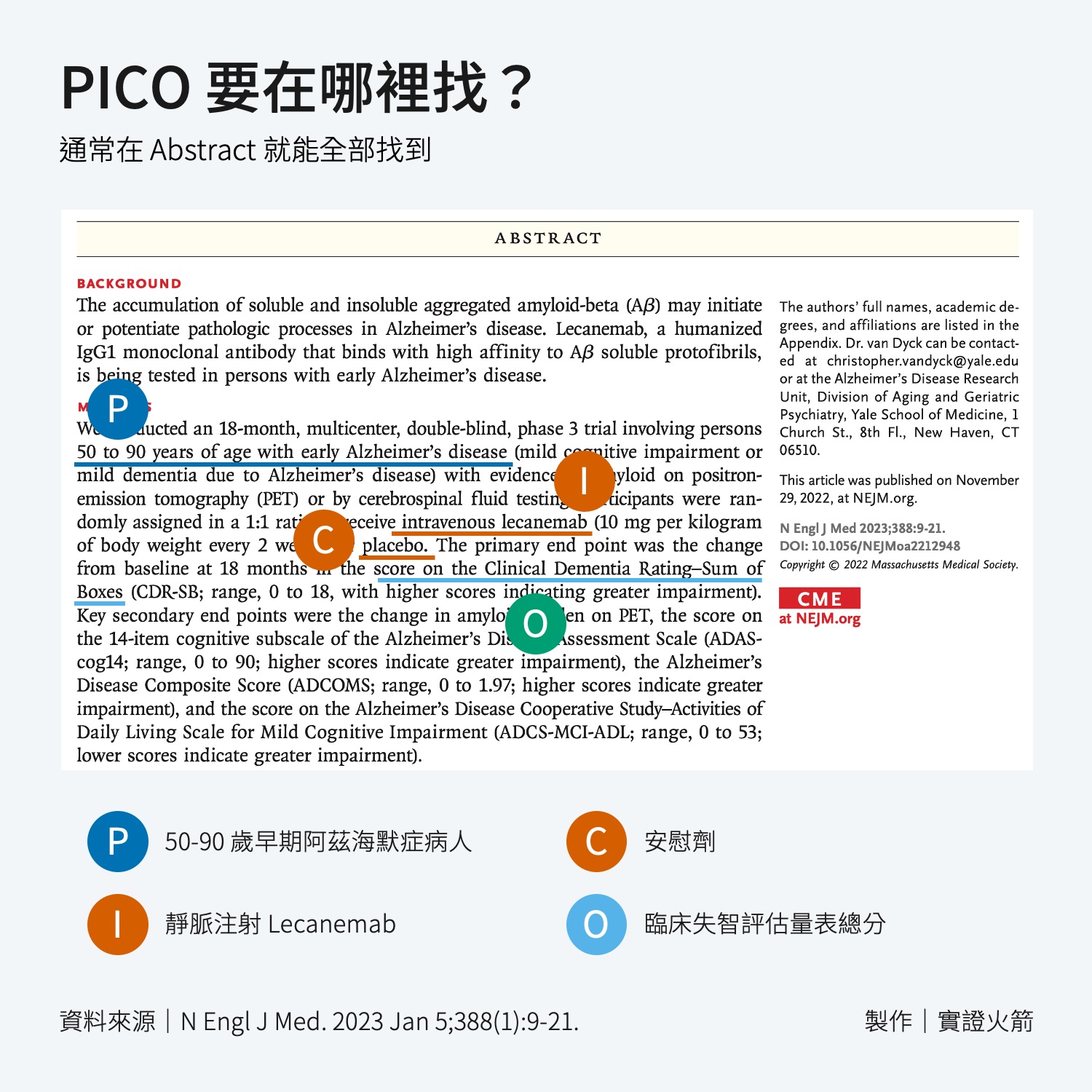
- 研究對象(Population)
- 介入措施(Intervention)
- 比較組(Comparator)
- 結果(Outcome/s)
- 時間(Time),例如研究時間框架(study timeframe)或追蹤間隔(follow-up intervals)
教學
下圖為 RCT 的案例,但 Systematic Review 也是一樣的找法。
問題 2:研究人員是否尋找了適當的研究設計來回答研究問題?
Did the researchers search for appropriate study design(s) to answer the research question?
原文提示
如果研究問題涉及介入措施的有效性,隨機對照試驗(RCT)是系統性回顧的適當研究設計。最常見的RCT類型是平行RCT,其中個體被隨機分配到不同的研究組;然而,根據研究問題的不同,其他隨機化方法也可能是相關的:
If the research question is concerned with the efficacy of an intervention, the RCT is the appropriate study design for a systematic review. The most common type of RCT is the parallel RCT in which individuals are randomised to study groups; other methods of randomisation, however, could be relevant depending on the research question:
- 交叉 RCT:旨在研究對長期病情有短期效果的介入措施;所有參與者都會接受兩種或更多的介入措施,但每位參與者接受介入的順序是隨機的,參與者自身作為對照。這種研究設計不應用於評估具有長期效果的介入措施。
Crossover RCTs are designed to investigate interventions that have short-term effects in people with long-term conditions; two or more interventions are given to all participants, but the order in which each participant receives the interventions is randomised, and participants act as their own controls. This study design should not be used to assess interventions with long-term effects. - 群集 RCT:對群體進行隨機分配,例如家庭、診所、學校或社區,通常用於研究在「群集」層面實施的介入措施,如與服務提供/交付或政策相關的介入措施。
Cluster RCTs randomise groups, such as families, clinics, schools, or communities, and are usually used to investigate interventions designed to be administered at a “cluster” level, such as those relating to service provision/delivery or policy.
教學
- 交叉 RCT 舉例:甲組先吃 A 藥,乙組先吃 B 藥,結束第一階段之後,等待一段時間,讓藥效消失。之後換甲組吃 B 藥,乙組吃 A 藥。
- 群集 RCT 舉例:將 20 所學校分為兩組,其中 10 間學校加入「程式學習」課程,另外 10 間作為對照組。
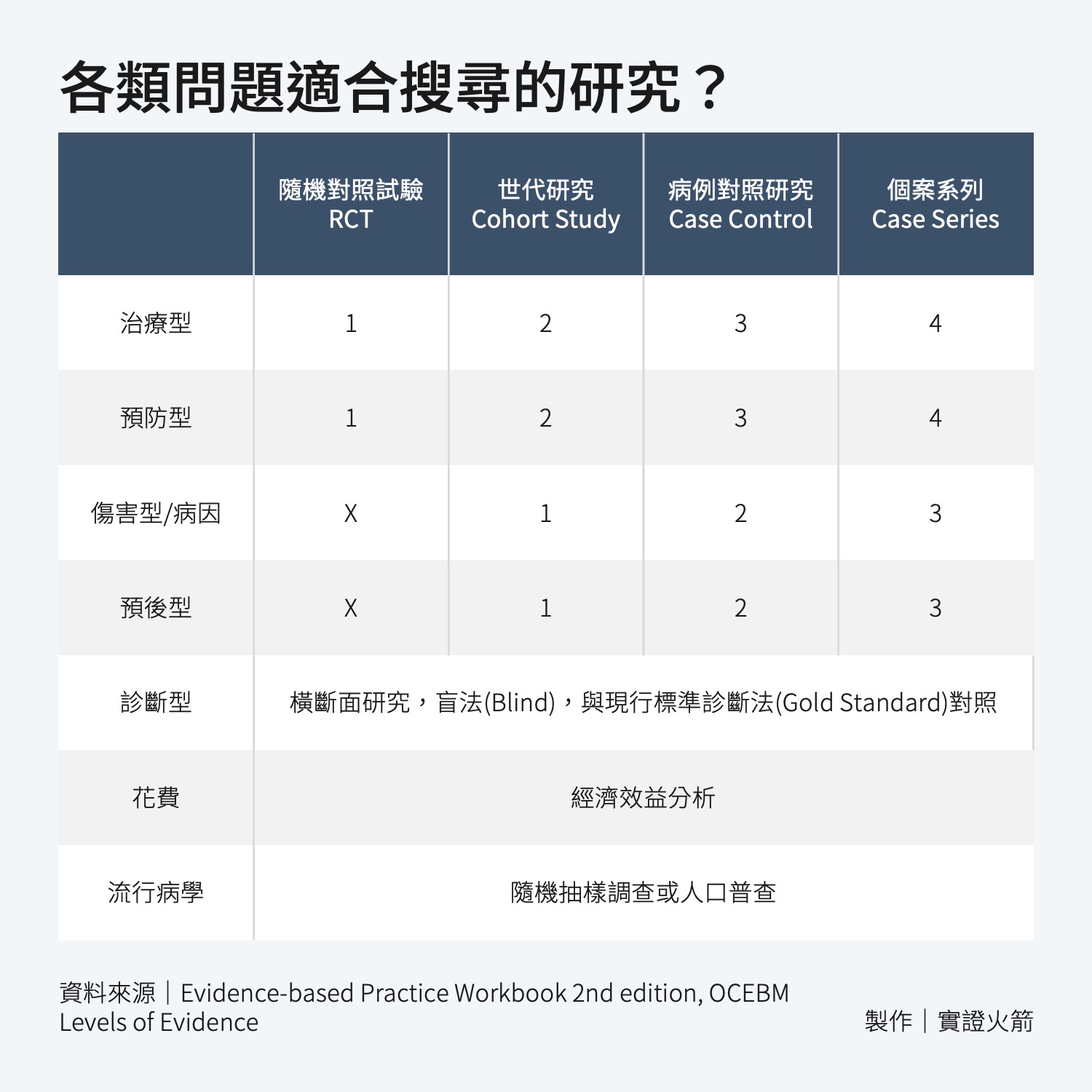
實證醫學常見的問題類型:
- 治療型、預防型研究:如果納入的是 RCT,回答「是」。
- 傷害型、預後型研究:如果納入的「世代研究」,回答「是」。
- 其他問題類型的最佳研究方法如下:
Section A 總結
如果您對這兩個問題的回答都是「否」:
If you answered “No” to both these questions:
- 這可能表示研究人員沒有清楚制定研究問題的基本方面,以及回答這個問題的最適當方式。如果是這樣,在進行系統性回顧的過程中很可能會出現其他問題。
It is likely that the researchers did not clearly formulate the fundamental aspects of the research question, and the most appropriate way of answering it. If this is the case, it is likely other problems will arise during the conduct of the systematic review. - 考慮繼續進行嚴格評讀是否有用?
Consider whether it would be useful to continue with the critical appraisal process.
Section B: 系統性回顧的方法學是否可靠?
Is the systematic review methodologically sound?
問題 3:系統性回顧中是否可能包含了所有重要且相關的主要研究?
Were all the important, relevant primary research studies likely to have been included in the systematic review?
問題 3A:搜尋主要研究
Searching for primary research studies
原文提示
- 搜尋策略是否全面且清楚報告?
Was the search strategy comprehensive and clearly reported? - 搜尋是否包括一個或多個主要書目資料庫,例如 MEDLINE/PubMed、Embase?
Did the search include 1 or more of the major bibliographic databases, e.g., MEDLINE/PubMed, Embase? - 是否搜尋了相關學科特定的書目資料庫?
Were relevant subject-specific bibliographic databases searched? - 搜尋是否包含非英語語言的研究?
Did the search include non-English language studies? - 搜尋是否包括手工搜尋系統性回顧中納入的研究的參考文獻列表?
Did the search include hand-searching of reference lists from primary research studies included in the systematic review? - 搜尋是否包括未發表的研究?例如,搜尋是否包括正在進行的試驗登記平台或預印本資源庫(如arXiv)以查找未發表的研究?
Did the search include unpublished studies? For instance, did the search include registers of ongoing trials or preprint repositories (e.g., arXiv) to find unpublished studies? - 研究人員是否與該領域的專家諮詢,以瞭解可能納入的主要研究或正在進行的試驗?
Did the researchers consult experts in the field about potential primary research studies or ongoing trials that could be included?
教學
- 搜尋策略:使用 AND OR NOT,MeSH terms 搜尋。
- 資料庫:根據權威機構「考科藍」公布的系統性回顧指引,所有考科藍系統性回顧都應該搜尋以下三個資料庫:
- MEDLINE
- Embase
- Cochrane Central Register of Controlled Trials (CENTRAL)
- 如果搜尋的主題有自己的資料庫,比如「護理」會使用「CINAHL資料庫」
- 如果該研究漏掉特定語言會漏掉很多有價值的研究,就應該搜尋非英語的研究。比如說:中醫就要搜尋中文資料庫。
- 未發表的研究常見搜尋平台
- ClinicalTrials.gov:美國國立衛生研究院(NIH)運營的臨床試驗登記庫。
- ISRCTN:國際標準隨機對照試驗編號登記庫。
- European Union Clinical Trials Register:歐盟的臨床試驗登記庫。
- WHO International Clinical Trials Registry Platform (ICTRP):世界衛生組織的國際臨床試驗登記平台。
- medRxiv:健康科學的預印本服務。
https://ebmrocket.com/how-many-databases-should-i-search
問題 3B:篩選來自搜尋的主要研究?
Screening primary research studies from the search
原文提示
- 研究人員是否定義了適當的篩選標準?
Did the researchers define appropriate screening criteria? - 研究人員是否設計並實施了一個穩健的篩選主要研究的過程?例如,兩名研究人員獨立篩選主要研究的標題和摘要,並由第三名研究人員解決任何分歧。
Did the researchers design and implement a robust process to screen the primary research studies? For instance, two researchers working independently to screen the titles and abstracts of the primary research studies, with a third researcher to settle any disagreements.
問題 3C:選擇納入系統性回顧的主要研究
Selecting primary research studies to include in the systematic review
- 研究人員是否定義了適當的(納入/排除)標準?
Did the researchers define appropriate eligibility (inclusion/exclusion) criteria? - 研究人員是否設計並實施了一個可靠的過程來將「選擇標準」應用於主要研究?例如,兩名研究人員獨立基於全文選擇主要研究,並由第三名研究人員解決分歧。
Did the researchers design and implement a robust process to apply the eligibility criteria to the primary research studies? For instance, two researchers working independently to select primary research studies based on the full papers, with a third researcher to settle disagreements. - 是否評估了負責選擇納入系統性回顧的主要研究的「研究人員之間」的一致程度?
Was the level of agreement between the researchers responsible for selecting the primary research studies for inclusion in the systematic review assessed?
教學
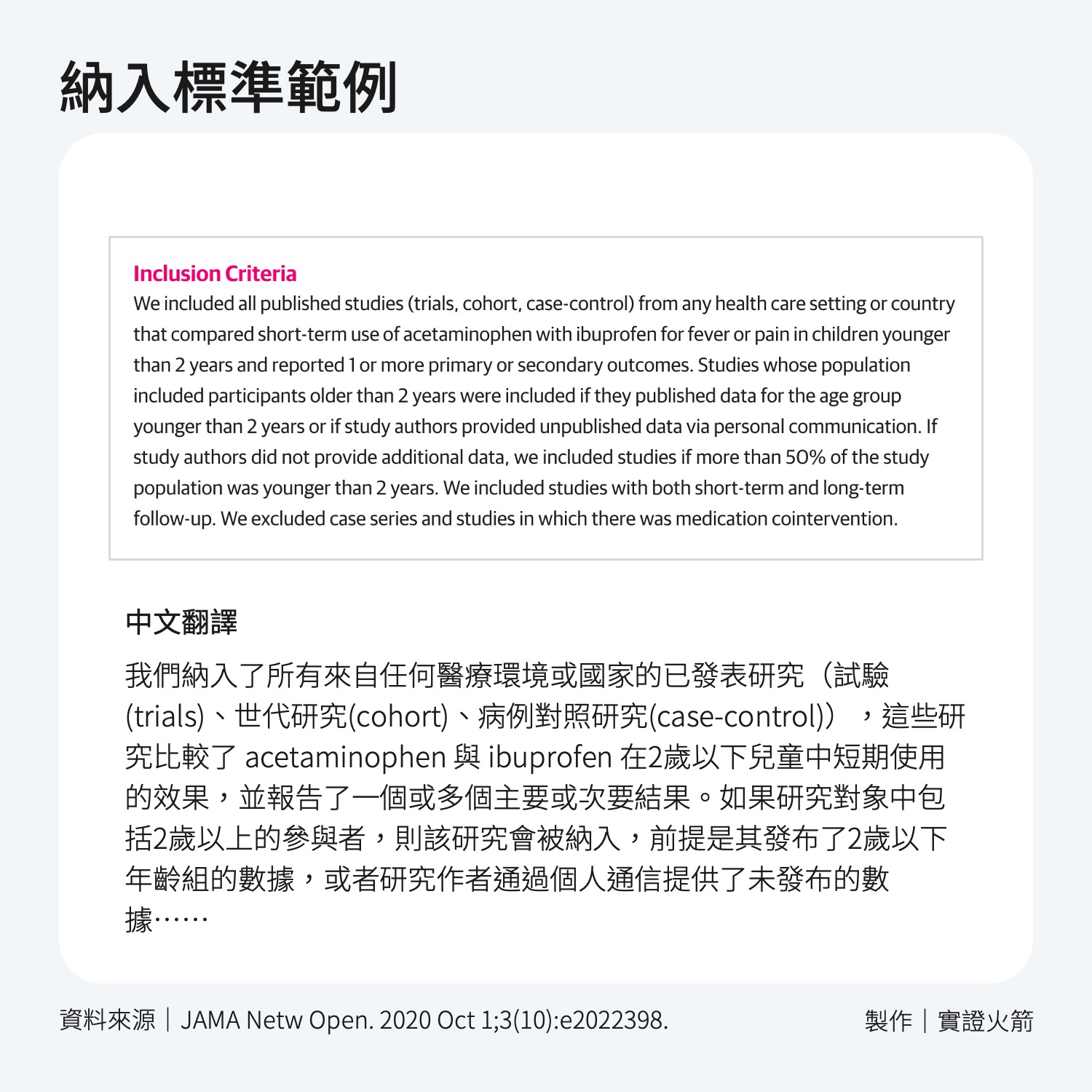
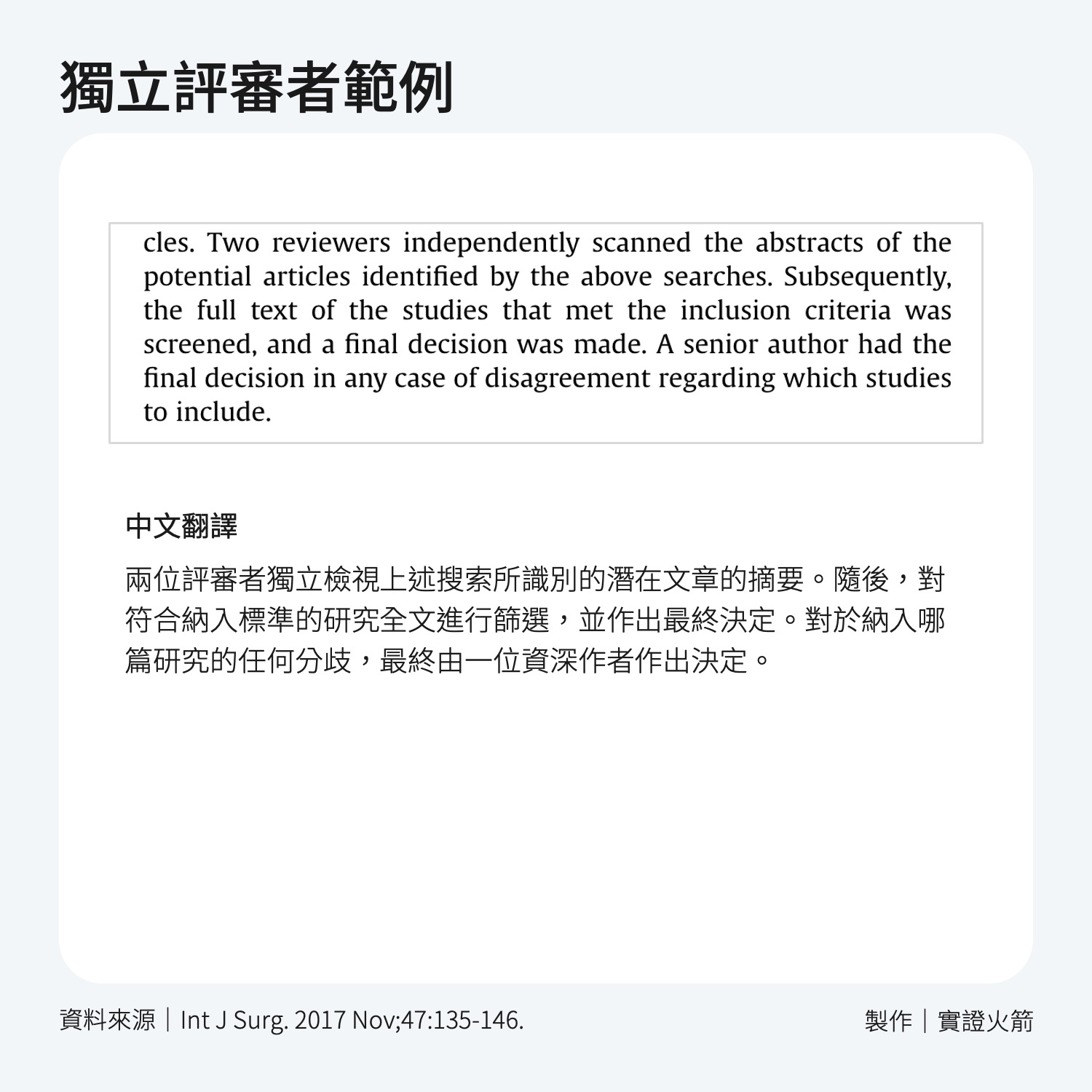
建議搜尋「inclusion criteria」、「Reviewer」、「Rater」
問題 3D:總結搜尋及其結果
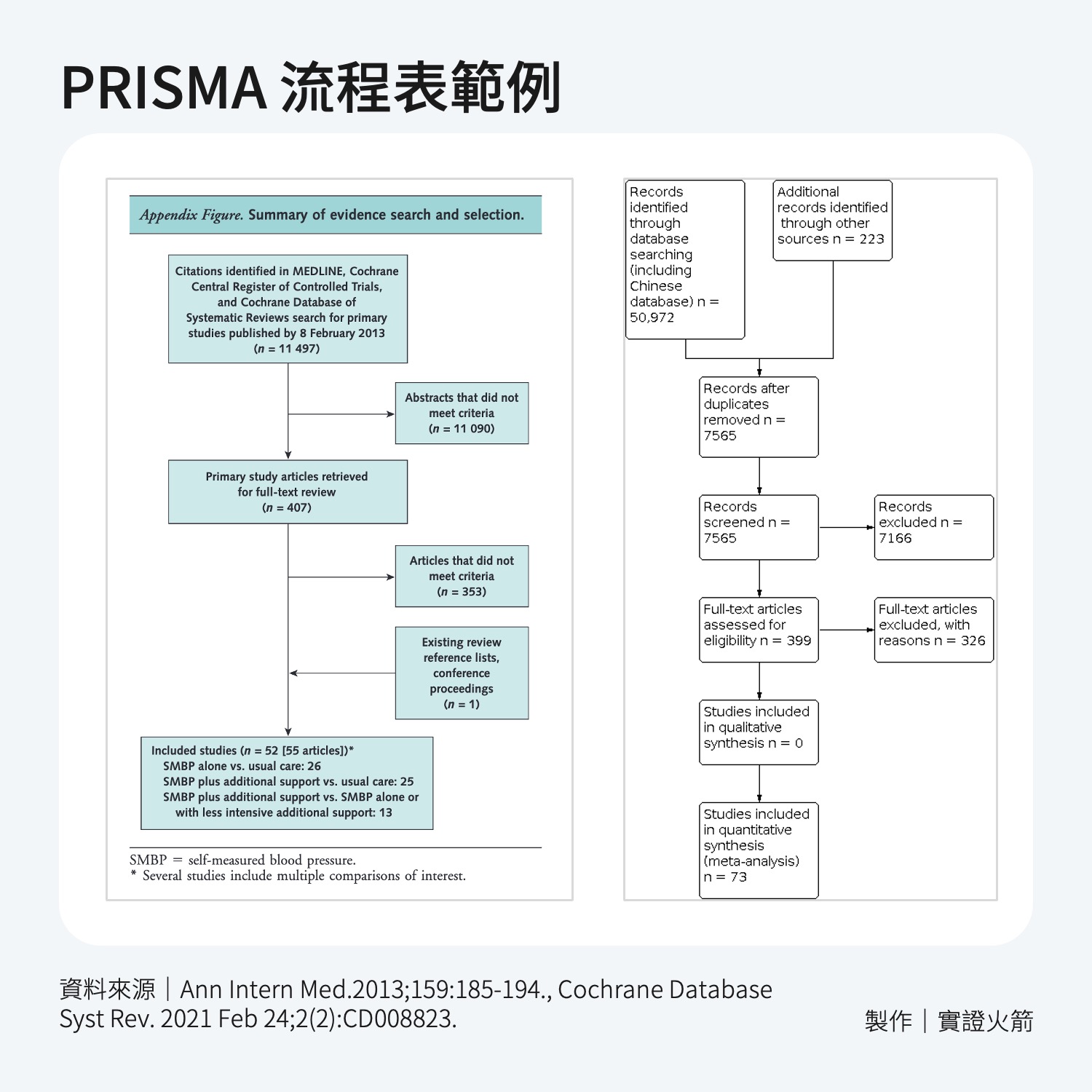
研究人員是否呈現了一個 PRISMA 類型的流程圖,包括以下主要研究的數量:
Did the researchers present a PRISMA-type flowchart, including the numbers of primary research studies that were:
- 重複的?Duplicates?
- 被篩選掉的?Screened out?
- 排除的,並附上排除的原因?Excluded, with the reasons for exclusion?
- 被納入系統性回顧的?Included in the systematic review?
- 被納入統合分析的(某些主要研究中的數據可能不完整)?Included in the meta-analysis (data may not have been complete in some of the primary research studies)?
教學
問題 4:研究人員是否評估了納入系統性回顧的主要研究的有效性或方法學嚴謹性?
Did the researchers assess the validity or methodological rigour of the primary research studies included in the systematic review?
原文提示:
個別主要研究中的方法學嚴謹性不足可能會影響系統性回顧和統合分析結果的有效性和解釋。
Lack of methodological rigour in the individual primary research studies can affect the validity and interpretation of the findings of the systematic review with meta-analysis.
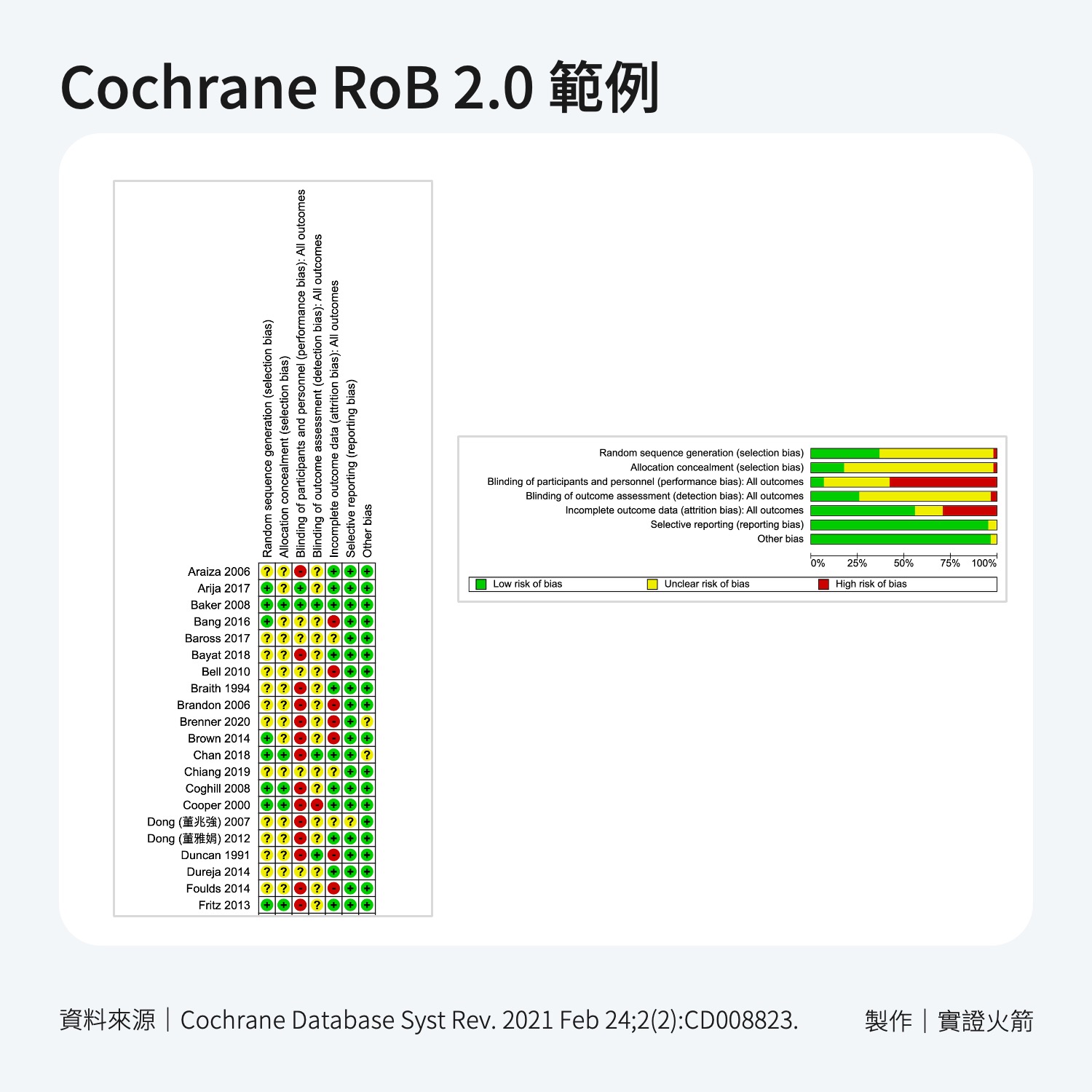
- 研究人員是否使用了經驗證的工具來評估納入系統性回顧的主要研究的方法學嚴謹性?
Did the researchers use a validated tool to assess the methodological rigour of the primary research studies included in the systematic review? - 該工具是否適合評估系統性回顧中包含的研究設計類型?例如,Cochrane偏誤風險工具專門用於隨機對照試驗(RCTs),或McMaster EPHPP工具用於任何量化研究設計,包括RCTs。
Was the tool appropriate to assess the type(s) of study design(s) included in the systematic review? For example, the Cochrane Risk of Bias tool specifically for RCTs or the McMaster EPHPP tool for any quantitative study design, including RCTs. - 研究人員是否呈現了他們的品質評估結果,並準確地解釋了這些結果?
Did the researchers present the findings from their quality assessment, and interpret them accurately?
教學
最常使用的方法是 Cochrane RoB 2.0
問題 5:研究人員是否適當且透明地提取並展示了個別主要研究中的訊息?
Did the researchers extract, and present information from the individual primary research studies appropriately and transparently?
問題 5A:數據提取
Extraction of data
- 研究人員是否設計並實施了一個穩健的過程來從個別主要研究中提取數據?
Did the researchers design and implement a robust process for the extraction of data from the individual primary research studies? - 研究人員是否使用了標準化表格或軟件程序來記錄數據,以確保記錄的完整性和準確性?
Did the researchers use a standardised form or software programme to record the data to ensure completeness and accuracy of recording?
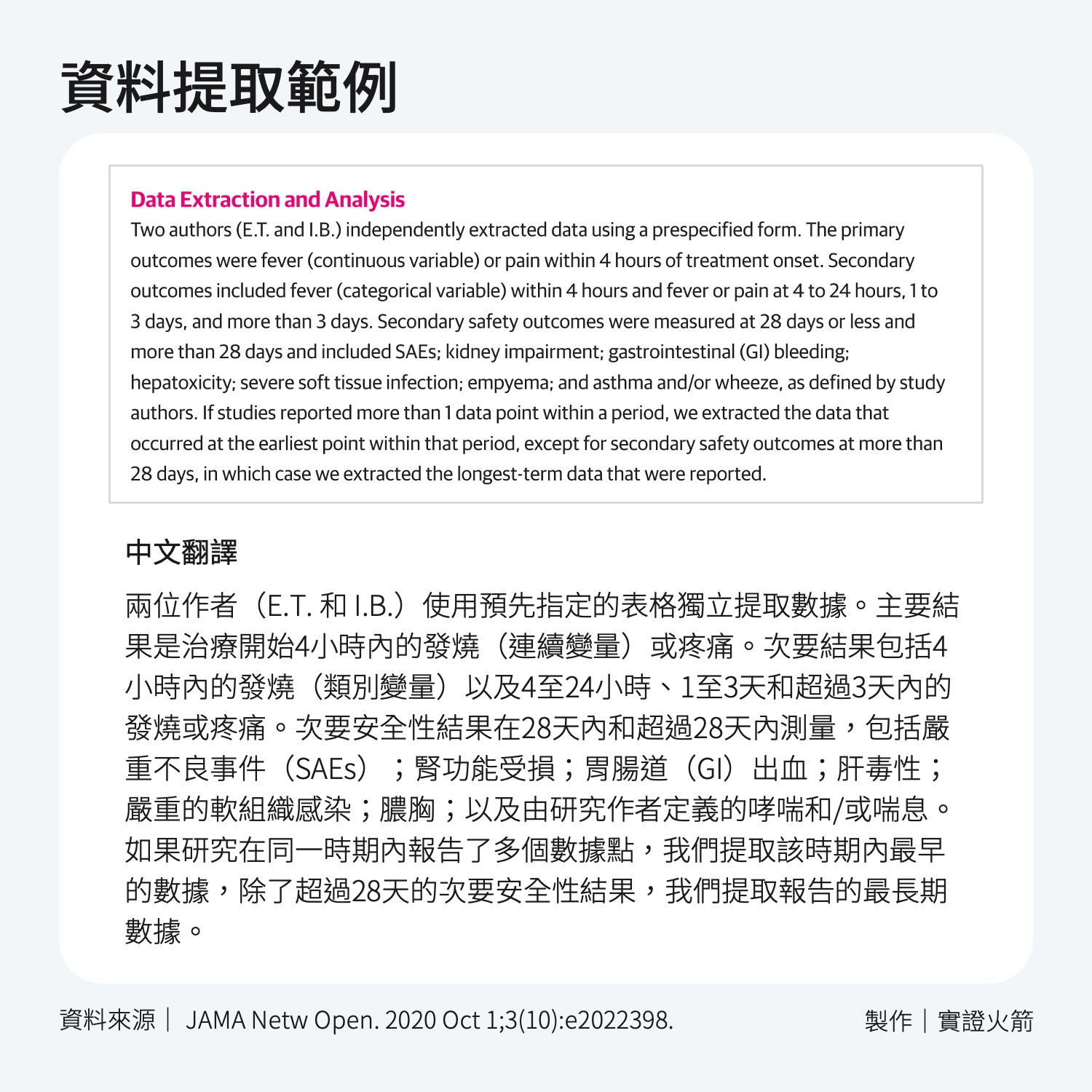
建議搜尋「Extraction」
問題 5B:數據展示
Presentation of data
原文提示
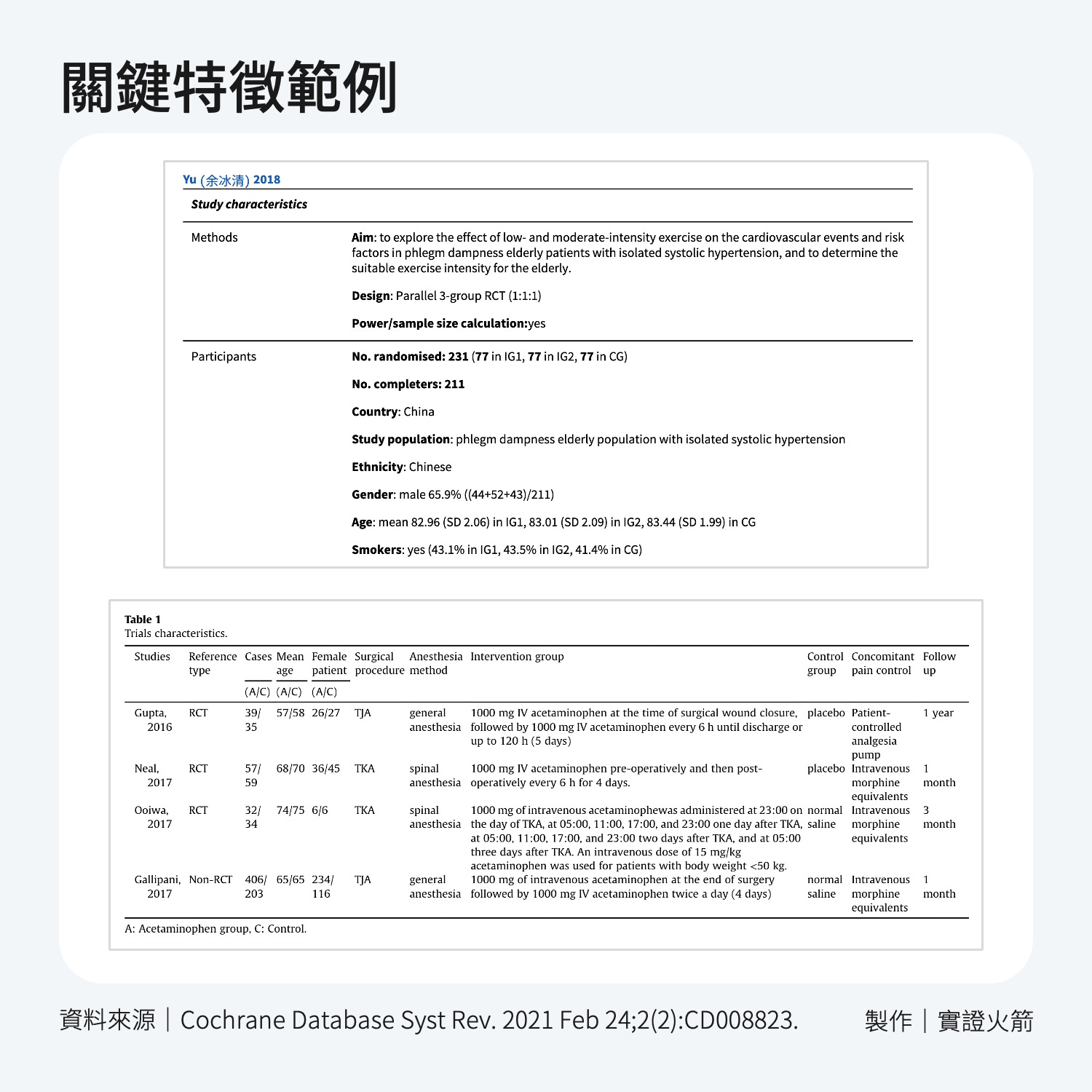
- 研究人員是否展示了個別主要研究的關鍵特徵?例如,參與者的數量、參與者的概況(年齡、性別)、介入措施、對照組、評估的結果和研究時間框架。
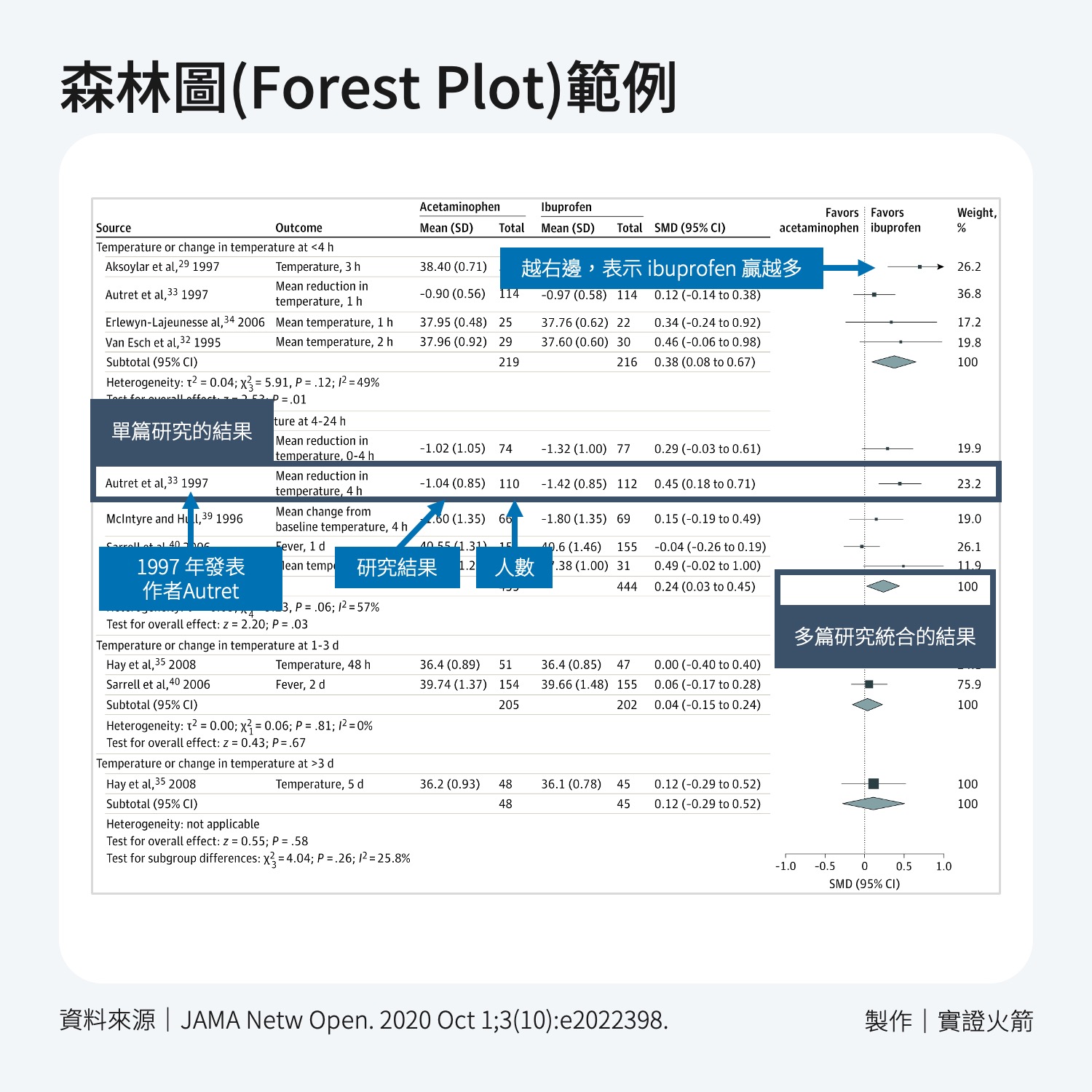
Did the researchers present the key characteristics of the individual primary research studies, e.g., in a table? For instance, the number of participants, the profile of participants (age, sex), the intervention, the comparator, the outcome/s evaluated, and the study timeframe. - 研究人員是否在森林圖或表格與森林圖的結合中展示了個別主要研究的結果?例如,效果值(effect size)、信賴區間和P值。注意:森林圖還應顯示系統性回顧的總體結果。
Did the researchers present the results of the individual primary research studies in a Forest plot or combination of table and Forest plot? For instance, the effect size/s, the confidence intervals, and the P value/s. NB: The Forest plot should also show the overall result from the systematic review.
教學
Section B 總結
如果你對這些問題的回答是“否”,那麼可能表明這個系統性回顧在方法學上缺乏嚴謹性,這意味著解釋結果時最好謹慎,並評估這些方法學欠佳的方面將如何影響系統性回顧的結果。
If you answered “No” to these questions, it is likely that there is a lack of methodological rigour in the conduct of the systematic review, which means it is best to interpret the results with caution, and to assess how those aspects of poor methodology will have an impact on the results of the systematic review.
- 對於問題3,如果回答是「否」,這表明該系統性回顧可能遺漏了一些可以有助於回答研究問題的主要研究;在進行系統性回顧和統合分析的情況下,任何遺漏的主要研究結果都可能改變系統性回顧的效果估計。
For Question 3, a “No” response indicates that this systematic review may have missed primary research studies that could have contributed to answering the research question; in a systematic review with meta-analysis, the results of any missing primary research studies could have altered the effect estimate for the systematic review. - 對於問題4,如果回答是「否」,這表明研究人員沒有識別出在主要研究中可能影響系統性回顧結果的系統性偏誤或混雜因素;在缺乏這些訊息的情況下,你無法評估系統性回顧的結果可能受到哪些方面的影響,因此解釋結果時最好謹慎。
For Question 4, a “No” response indicates that the researchers did not identify any systematic bias or confounding factors in the primary research studies that could have affected the results of the systematic review; in the absence of this information, it is not possible for you to assess in what ways the results of the systematic review could have been affected, and it is best to be cautious when interpreting the results. - 對於問題5,「否」回答表明研究人員沒有以統一的方式整理來自主要研究的數據,這樣數據就無法適當分析,從而無法從中得出可靠的結論。
For Question 5, a “No” response indicates that the researchers did not organise the data from the primary research studies in a coherent way such that it could be analysed appropriately, and thereby reliable conclusions drawn from it.
如果您對B部分中的所有三個問題都回答「否」,請考慮是否有必要繼續進行嚴謹評讀過程。
If you answered “No” to all three questions in Section B, consider whether it would be useful to continue with the critical appraisal process.
Section C: 系統性回顧的結果是否可信?
Are the results of the systematic review trustworthy?
問題 6:研究人員是否恰當地分析了個別主要研究的合併結果?
Did the researchers analyse the pooled results of the individual primary research studies appropriately?
原文提示
- 研究人員是否在設計和規劃系統性回顧時進行了統計檢定力計算,並且輸入分析的參與者數量是否滿足了統計檢定力計算,即該系統性回顧是否有足夠的檢定力來檢測對感興趣結果的任何影響?
Did the researchers undertake a power calculation during the design and planning of the systematic review, and did the number of participants whose outcomes were entered into the analysis meet the power calculation, i.e., was the systematic review sufficiently powered to detect any effect on the outcomes of interest? - 研究人員是否評估了主要研究之間的統計異質性(變異性)嚴重度?例如,使用I²統計量。
Did the researchers assess the level of statistical heterogeneity (variability) among the primary research studies? For example, using the I² statistic. - 研究人員是否根據主要研究之間的異質性嚴重度使用了適當的統合分析模型(若存在異質性則使用隨機效應模型,若主要研究都在調查相同的潛在效應則使用固定效應模型)?
Did the researchers use an appropriate model of meta-analysis for the level of heterogeneity among the primary research studies (a random-effects model if there was heterogeneity or a fixed-effects model if the primary research studies were all investigating the same underlying effect)? - 研究人員是否提供了系統性回顧中效果估計的信賴區間?
Did the researchers provide confidence intervals for the effect estimates in the systematic review? - 研究人員是否提供了系統性回顧中效果估計的p值?
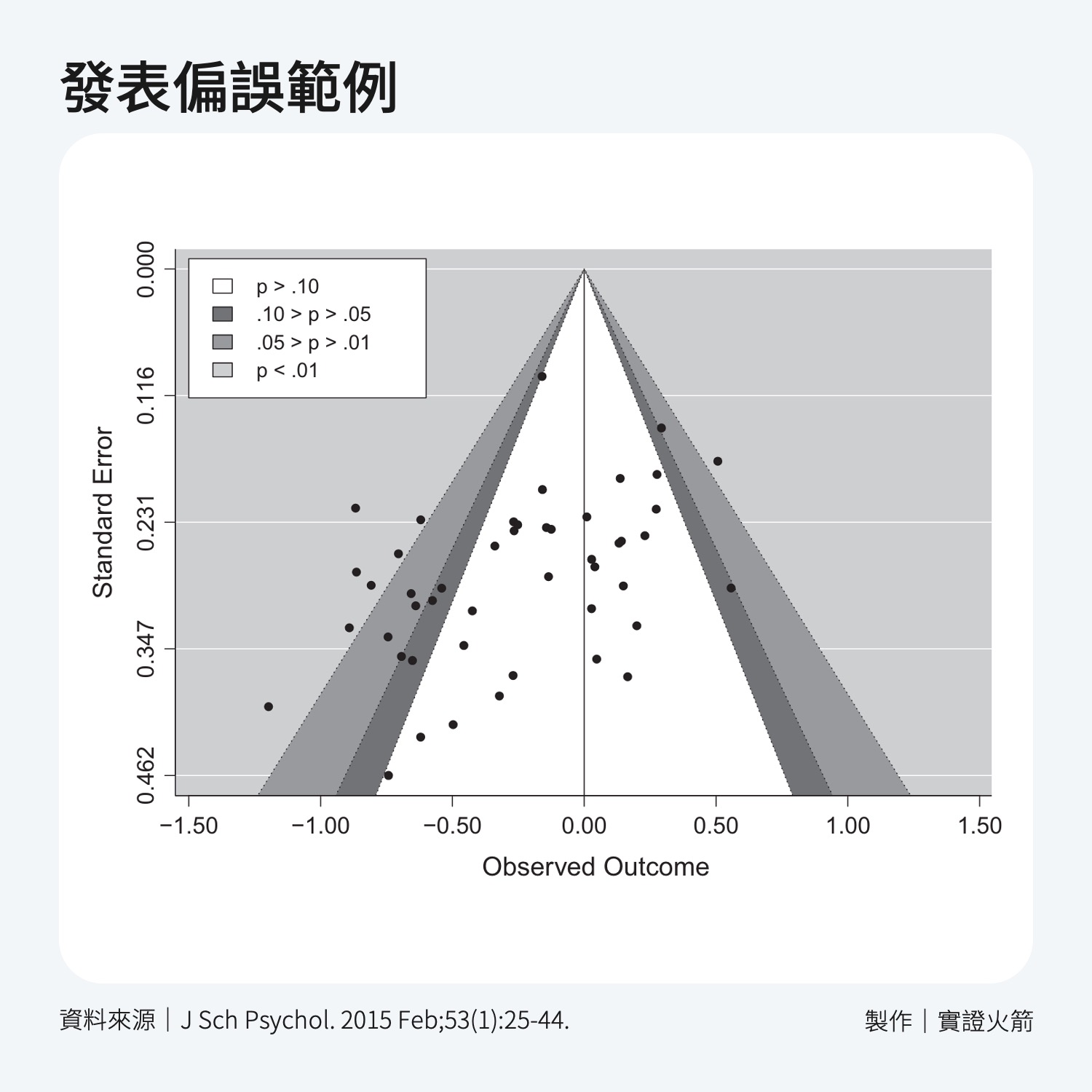
Did the researchers provide p values for the effect estimates in the systematic review? - 研究人員是否在系統性回顧中評估了發表偏誤的可能性(例如,使用漏斗圖)?
Did the researchers assess the potential for publication bias in the systematic review (e.g., using a funnel plot)?
教學
- 檢定力(Power):詳細的教學可以看 GRADE 教學中的「什麼是 OIS?」
- 異質性I²(I square):50% 以下都屬於可接受範圍。
- 隨機效應(Random effect)、固定效應(Fixed effect)模型:初學者可以根據異質性指標I²來判斷:如果I²較高(通常超過50%),應使用隨機效應模型;如果I²較低(通常低於50%),則可使用固定效應模型。
- 信賴區間(confidence interval,CI):森林圖通常會附上信賴區間,跨過中線代表無顯著差異。
- P 值(P value):在統合分析中,未必會計算 P 值,因此如果沒有影響不大。
- 漏斗圖 (Funnel Plot):如果漏斗圖呈對稱形狀,則暗示出版偏誤較小;若呈不對稱形狀,則可能存在出版偏誤或其他系統性誤差。
問題 7:研究人員是否報告了系統性回顧的任何限制?如果有,討論的限制是否涵蓋了你在嚴格評讀中所識別的所有問題?
Did the researchers report any limitations of the systematic review and, if so, do the limitations discussed cover all the issues you have identified during critical appraisal?
原文提示
- 系統性回顧是否有足夠的檢定力來檢測對感興趣結果的影響?
Was the systematic review sufficiently powered to detect an effect on the outcomes of interest? - 研究人員是否考慮到可能遺漏了重要的相關主要研究?
Did the researchers consider whether important relevant primary research studies could have been missed? - 根據品質評估,研究人員是否識別出主要研究中的方法學問題或潛在的偏誤和/或混雜因素,並討論其對系統性回顧結果的影響?
Based on the quality assessment, did the researchers identify methodological issues or potential sources of bias and/or confounding in the primary research studies, and discuss the implications for the results of the systematic review? - 研究人員是否識別出主要研究之間潛在異質性的原因,並討論其對系統性回顧結果的影響?
Did the researchers identify reasons for any potential heterogeneity across the primary research studies and discuss the implications for the results of the systematic review? - 研究人員是否反思系統性回顧結果的精確性,即信賴的範圍(範圍越小,信賴區間越窄,結果越精確,越接近真實效應)?
Did the researchers reflect on the precision of the results of the systematic review, i.e., the range of the confidence intervals (a smaller range, the narrower the confidence intervals, means the result is more precise, and closer to the true effect)? - 如果相關,研究人員是否注意到信賴區間範圍是否包括「無效線」(差異為0,比率為1,成立虛無假設),或者信賴區間範圍的下限是否接近「無效線」,並討論其對系統性回顧結果的影響?
If relevant, did the researchers note whether the confidence-interval range included the “line of no effect” (0 for a difference, 1 for a ratio, where the null hypothesis holds true), or whether the lower limit of the confidence-interval range was close to the “line of no effect” and discuss the implications for the results of the systematic review? - 如果結果在統計學上顯著(即不太可能是由於偶然),研究人員是否討論了結果對負責的專業人士以及接受介入的個人和/或人群是否具有重要性或意義?
If the results were statistically significant (i.e., they were less likely to be due to chance), did the researchers discuss whether the results would be important or meaningful for both the responsible professionals and for the individuals and/or populations receiving the intervention? - 研究人員是否討論了任何發表偏誤對系統性回顧結果的影響?
Did the researchers discuss the implications of any publication bias on the results of the systematic review?
教學
論文中有沒有討論到 1-6 題你提到的那些問題?你可以回顧你在 1-6 題中回答「否」的項目有哪些?
以下的詳細教學會放在網站的「Apply」類文章中。
Section D:系統性回顧的結果是否與當地相關?
Are the results of the systematic review relevant locally?
問題 8:系統性回顧的結果是否可以應用於當地人口/你的當地設置或情境中?
Can the results of the systematic review be applied to your local population/in your local setting or context?
- 您是否清楚系統性回顧的結果顯示了什麼?
Are you clear about what the results of the systematic review show? - 系統性回顧中的主要研究的參與者是否與您的當地人口相似或不同?
Are the participants from the primary research studies in the systematic review similar to or different from your local population? - 系統性回顧中的主要研究的當地設置或情境是否與您的當地設置或情境相似或不同?
Are the local settings or contexts from the primary research studies in the systematic review similar to or different from your local setting or context? - 是否有研究人員未研究的任何結果對於您決定是否採取系統性回顧的結果有幫助?
Are there any outcomes the researchers could have studied that would have been useful to you in deciding whether to act upon the results of the systematic review?
Section D 總結
- 如果您對此問題回答「否」,則無需回答問題9和10,因為無論系統性回顧的方法學嚴謹性如何,其結果都不適用於您負責的個人或人群。
If you answered “No” to this question, it is not necessary to answer Questions 9 and 10 because, irrespective of a systematic review’s methodological rigour, the results are not applicable to the individuals or populations for whom you are responsible. - 如果您對第8題回答「是」,請回答第9題和第10題。
If you answered “Yes” to Question 8, answer Questions 9 and 10.
Section E:系統性回顧結果的實施是否會為您的服務使用者或人口帶來更大的價值?
Will the implementation of the results represent greater value for your service users or population?
問題 9:如果系統性回顧的結果可以應用於您的當地人口/您的設置,採取行動的好處是否超過實施相關的任何潛在缺點、傷害和/或額外的資源需求?
If the results of the systematic review can be applied to your local population/in your setting, would the benefits of acting upon the results outweigh any potential disadvantages, harms, and/or additional demand for resources associated with implementation?
原文提示
- 研究人員是否識別出與介入措施相關的任何潛在缺點或傷害?
Did the researchers identify any potential disadvantages or harms associated with the intervention? - 研究人員是否將任何缺點或傷害與介入措施的好處進行了比較,並討論了兩者之間的平衡?
Did the researchers assess any disadvantages or harms against the benefits of the intervention, and discuss the balance between the two? - 研究人員是否報告了任何與採取系統性回顧結果相關的潛在資源需求(例如成本、人力、時間、技能/技能組合、資訊科技)的訊息?
Did the researchers report any information on the potential demand for resources (e.g., cost, workforce, time, skills/skill mix, IT) that might be associated with acting upon the results of the systematic review
如果研究人員沒有處理好處與潛在缺點、傷害和/或資源需求之間的平衡,您認為如何——參見第10題?
If the researchers did not address the balance of benefits to potential disadvantages, harms, and/or demand for resources, what do you think – see Question 10?
問題 10:如果付諸行動,系統性回顧的結論是否會為您負責的個人或人群帶來更大或額外的價值?
If actioned, would the findings from the systematic review represent greater or additional value for the individuals or populations for whom you are responsible?
原文提示
價值等於「結果(好處減去傷害)」除以「實施所需的資源」。
Value equals the Outcome/s (Benefit minus Harm) divided by the Resources required for implementation.
- 實施系統性回顧的結論需要哪些資源?考慮各種資源類型,不僅僅是支出,還包括時間、技能組合、技能發展或培訓需求、資訊科技需求和其他物質資源。
What resources would be needed to implement the findings of the systematic review? Take account of various types of resource, not only expenditure, but also time, skills mix, skills development or training needs, IT requirements, and other material resources. - 您是否能夠在其他地方取消資源投注,以重新投注於系統性回顧結果的實施?
Are you able to disinvest resources elsewhere to be able to re-invest in the implementation of the findings from the systematic review?
Section E 總結
- 如果您對這些問題回答「否」,則即使系統性回顧適用於您的當地設置,其結論也不太可能為您負責的個人和/或人群帶來更大或額外的好處或價值。
If you answered “No” to these questions, it is likely that the findings of the systematic review will not confer greater or additional benefit or value on the individuals and/or populations for whom you are responsible, despite the systematic review’s applicability to your local setting. - 如果您對一個或兩個問題回答「是」,則系統性回顧的結論很可能會為您負責的個人和/或人群帶來更大或額外的好處或價值,您需要與同事討論是否適合在您的當地設置中實施這些結論。
If you answered “Yes” to one or both questions, it is likely that the findings of the systematic review will confer greater or additional benefit or value on the individuals and/or populations for whom you are responsible, and you need to discuss with colleagues whether it would be appropriate to implement the findings in your local setting.